
Searching for fun ways to exercise? The idea that exercise must be scheduled, sweaty, and sacrosanct is outdated. Movement can slip into your day so seamlessly you barely notice it. Imagine trading the dread of a gym session for small, joyful habits that build strength, stamina, and happiness without the clock ticking in your ear.
This matters because life is busy, and “not enough time” is the most common excuse for skipping exercise. But behind that excuse often lies a deeper truth: we avoid things that feel like work. The good news is that when movement is reframed as play, utility, or social time, it stops feeling like a task and starts feeling like part of living. Those thirty-second bursts of activity, playful detours, and habit tweaks add up – in energy, resilience, and overall health – in ways that a single hard hour at the gym sometimes can’t match.
This isn’t about gimmicks or fads; it’s about reclaiming movement by redesigning moments. When exercise becomes invisible, you sidestep resistance, boost consistency, and enjoy the psychological lift that comes from doing things that feel good rather than feel like punishment.
Here, you’ll discover fun ways to exercise that require little effort or acknowledgement, activities that portend enthusiasm, rather than ominousness.
Geocaching: A Hidden Treasure Hunt Workout
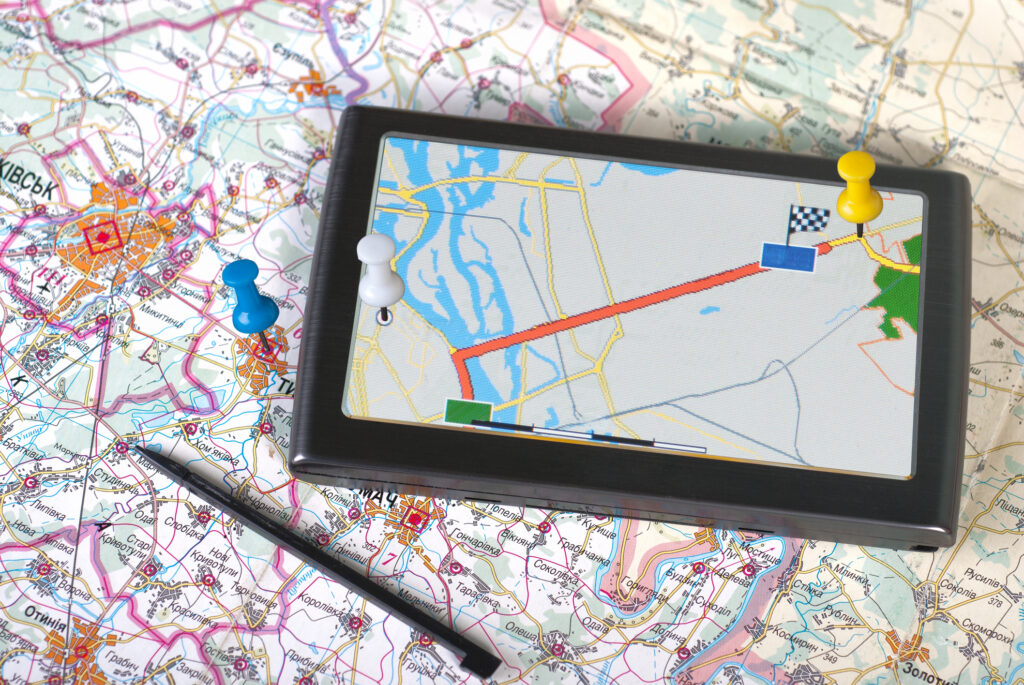
Geocaching is a real-world, outdoor treasure hunting game using GPS-enabled devices. Participants navigate to a specific set of GPS coordinates and then attempt to find the geocache (container) hidden at that location.
As you geocache, you may set out to find one “cache” and end up hiking three miles, climb over fallen logs, or even scale small hills and slopes. Because you are focused on the “find,” the distance becomes secondary to the discovery. Geocaching turns the entire world into a giant puzzle. It’s perfect for solo explorers, families, or couples who want an excuse to explore new parks and urban corners. It is, in addition, a “stealth” form of exercise where one can burn a deceptive amount of calories.
Standing Desk Benefits for Better Posture

Do you work in an office? Many white-collar workers are susceptible to adopting a more sedentary lifestyle congruent with their daily objectives, which generally involves a high degree of screen-time, face forward in front of a computer. One way to combat the the deleterious effects of such physical idleness is to incorporate a standing desk into your workspace.
While standing, you naturally shift your weight, stretch your calves, and engage your core. These tiny adjustments add up to significant caloric expenditure over an eight-hour workday. Standing burns roughly 0.15 more calories per minute than sitting; over a year, this can equal the calories burned in several marathons. A standing desk, moreover, encourages increased mobility, incentivizing easy walks to the water cooler, a nearby Keurig, or even accepting a phone call while taking a stroll. Users of standing desks also report additional mental clarity and alertness, yielding further productivity at their places of work.
Active Meetings as Fun Ways to Exercise

Most work meetings are confined to professional conference room, where employees listlessly discuss a set of ordained agenda items. They can be impersonal, redundant, mundane, and habituate a prevailing sense of boredom.
In some workspaces, employers integrate physical movement into their meetings, especially if they only consist of several people. Steve Jobs, for instance, famously integrated “walking meetings” into his professional interactions, particularly for first encounters or serious conversations. Walking outdoors stimulates bilateral brain stimulation, which is a fancy way of saying it makes you more creative. If walking meetings are not a viable option, you can still tailor your workspace for physical activity by purchasing a wireless headset to manage video calls, pacing around your space as your progress through critical points of work. Even during larger meetings, where a large amount of employees must congregate, you can still engage in “micro-stretches” while sitting; leveraging “hidden movements” like calf raises or glute squeezes to achieve a minute amount of physical engagement.
Core benefits of active meetings include substantial caloric burn, cognitive improvement, elevation of mood, and increased sense of community via concomitant social bonding.
Turn Cleaning Into Fun Ways to Exercise Daily

Rather than viewing cleaning as a tiresome obligation, begin regarding as an opportunity for fun and rudimentary physical exercise. Cleaning is the heavyweight champion of “exercise without realizing it.” It involves constant bending, reaching, scrubbing, and lifting; mimicking functional gym movements like lunges, overhead presses, and squats.
Cleaning can be fun! If you find it toilsome, you can apply numerous strategies to make it less burdensome. One strategy is the “Power Hour:” Put on a high-tempo playlist, set a timer and try to vacuum your entire house before the timer dings. By doing this, you’re unconsciously engaging in a HIIT, or high interval, training session. You can also try the “Lunge Vacuum” by dropping into a controlled lunge every time you push your vacuum forward. Even while folding laundry, you can incorporate a squat every time you’re required to pick up an additional stack of clothes from your laundry basket.
Office “Parkour” for More Daily Movement
“Parkour,” or subversive fitness, turns your everyday environment into a playground, proving that you don’t need a squat rack when you have a staircase and a little imagination. “Office Parkour” isn’t about doing backflips off the copier, it’s about finding creative, non-linear ways to navigate your workspace.
Simple ways of engaging in parkour can include myriad things. For example, never take the elevator, opt for the stairs. Take the stairs two at a time or try “sideways” stepping to engage your lateral muscles and glutes. Try desktop push-ups by using the edge of a sturdy desk for incline push-ups between emails. If there’s a flat, safe curb or a line on the carpet in the hallway, practice walking heel-to-toe to work on your core stability and proprioception while heading to the breakroom. Instead of walking through the wide-open lobby, take the path that requires you to duck under a railing or step over a low barrier (safely!). All of these activities can improve agility, increase energy levels and functional mobility, and provide necessary stress relief.
Bike to Work for a Built‑In Workout
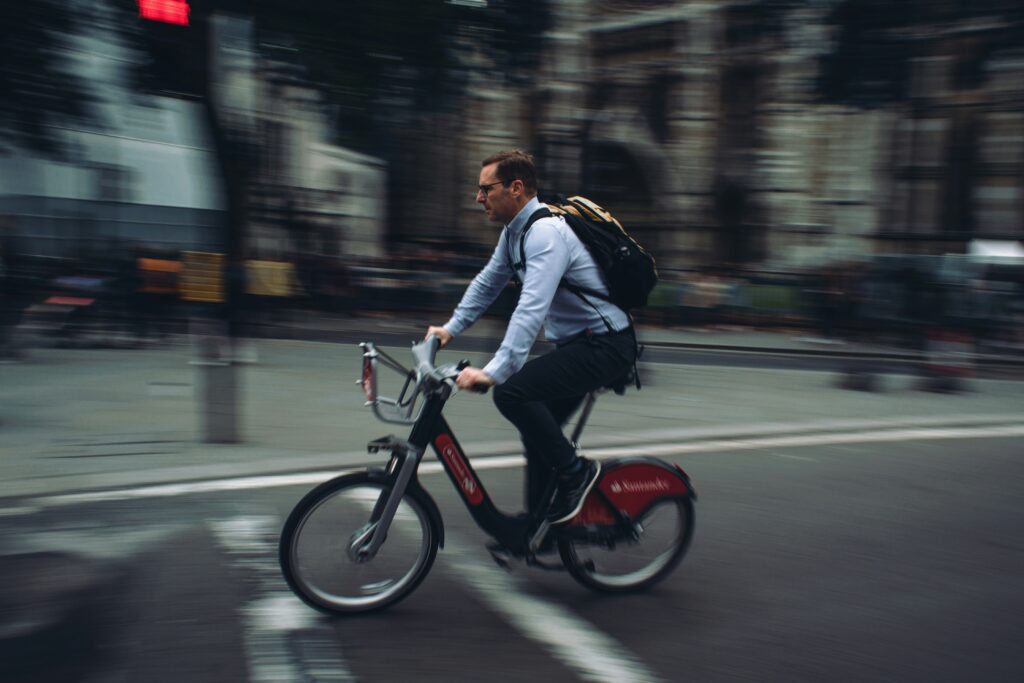
If you’ve ever sat in gridlock traffic wishing you were anywhere else, it’s time to embrace “Commuter Cardio,” or biking to work. This is the ultimate form of stealth fitness because the exercise isn’t an extra task on your to-do list—it is the commute. Swapping your car keys for a helmet turns a sedentary “dead hour” into a high-octane fitness session. It’s one of the few ways to get a vigorous workout while technically just “going to the office.”
Some tips for crafting a fun biking route include:
- Interval Traffic Light: Use red lights as a chance to catch your breath and green lights as a “sprint” start. This turns your commute into a natural HIIT (High-Intensity Interval Training) session.
- Scenic Route: Once or twice a week, take the “long way” through a park or a hilly neighborhood. You’ll be so distracted by the fresh air and scenery that you won’t focus on the burn in your quads.
- Gear Shifting: Experiment with different resistance levels. Staying in a higher gear for a few blocks builds leg strength, while a lower gear with fast pedaling boosts cardiovascular endurance.
Parking Habits That Add Extra Steps Daily

Choosing the “worst” parking spot is secretly the best fitness hack in your arsenal. It’s the ultimate way to sneak in a workout because your brain is focused on your destination—the store, the office, or the movie theater—rather than the steps themselves.
Always aim for the empty spaces at the very back of the lot. You’ll save time by never hunting for a “close” spot, and you’ll instantly add 500 to 1,000 steps to your daily total. If, rather, you’re in a multi-level parking garage, park on a different floor than your destination and take the stairs. That short vertical climb spikes your heart rate and wakes up your glutes.
Adding even 10 minutes of extra walking a day significantly lowers the risk of heart disease and stroke over time. In addition, those extra 2–3 minutes of walking give your brain a “buffer” to transition from driving stress to your next task.
Tai Chi Movements Offer Fun Ways to Exercise
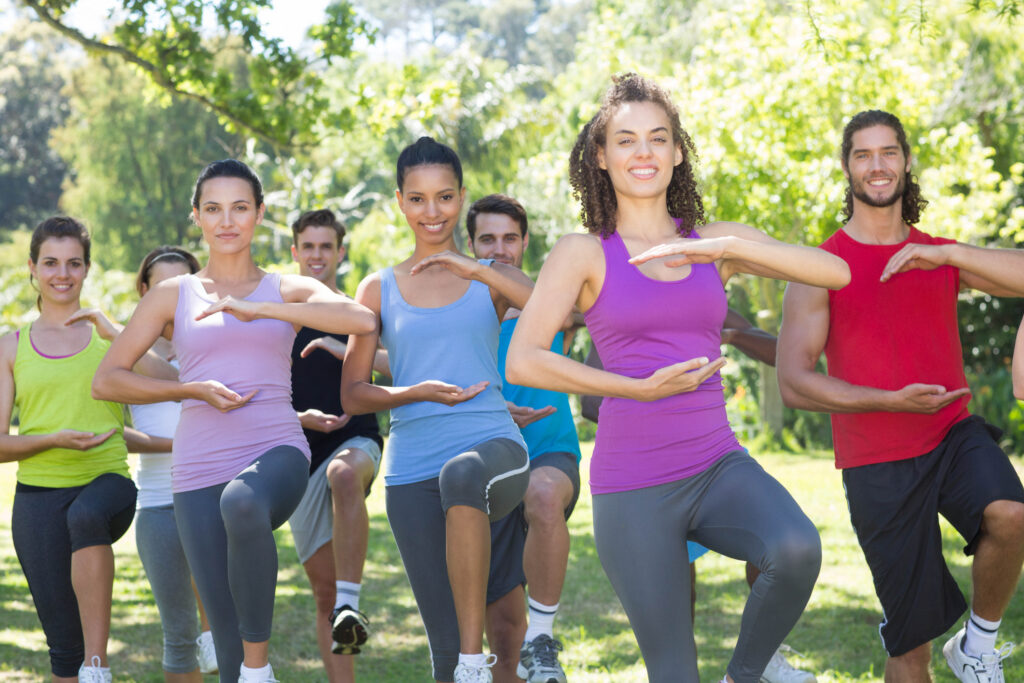
Tai Chi is an ancient Chinese tradition that, today, is practiced as a graceful form of exercise. It involves a series of movements performed in a slow, focused manner accompanied by deep breathing.
Tai Chi and mindful movement represent a shift from “burning out” to “filling up.” By focusing on the quality and flow of movement rather than the quantity of repetitions, you cultivate a type of physical resilience that is both sustainable and restorative. This method bypasses the “no pain, no gain” mentality, replacing it with a sophisticated system of body awareness that improves posture, strength, and mental clarity simultaneously. When your exercise feels more like a moving meditation than a physical chore, you’re much more likely to maintain it as a lifelong habit.
Active Video Games for an Easy Fitness Boost
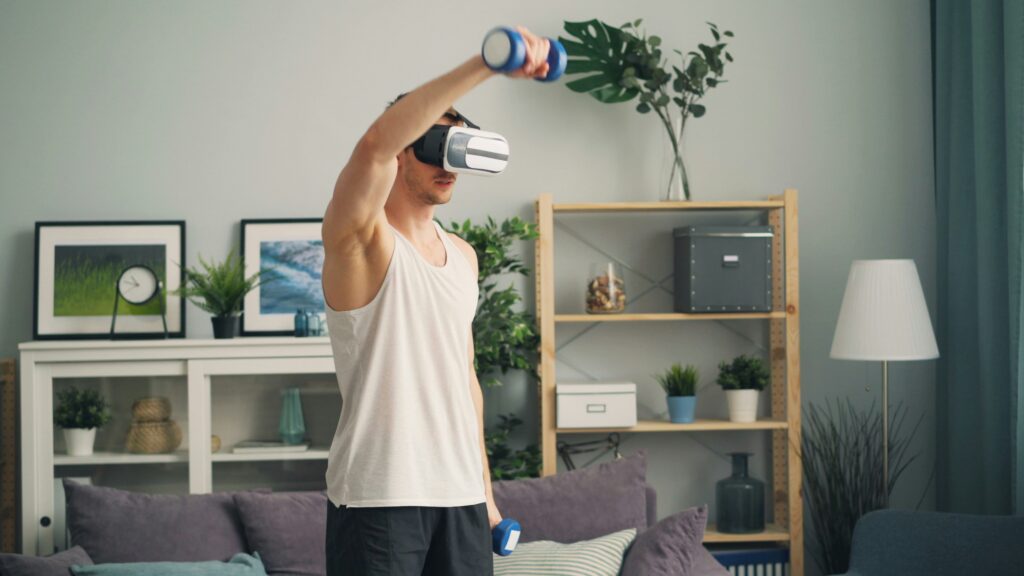
If you’re the type of person who finds the “reps and sets” of a gym session mind-numbing, it’s time to embrace “Digital Athletics.” By merging entertainment with physical exertion, you can trick your body into a high-intensity workout while your brain is focused entirely on hitting a high score.
Active gaming, or “Exergaming,” has evolved far beyond basic motion tracking. Modern titles, especially in Virtual Reality (VR) or augmented reality; require genuine athletic movement, coordination, and stamina. Titles like “Beat Saber” or “Synth Riders” have you slashing or punching targets to the beat of high-energy music. Players often find their heart rates reaching zones comparable to tennis or rowing without feeling the typical “fatigue” of a workout.
Active video games represent the perfect synergy of technology and physical conditioning, effectively removing the psychological friction of “going to work out.” By shifting the focus from the physical cost of movement to the digital reward of the game, you engage in a form of exercise that feels entirely effortless from a mental standpoint. This approach not only builds cardiovascular endurance and muscular coordination but also transforms your living room into a versatile training ground.
Dog Shelter Volunteering Offers Fun Ways to Exercise

If you struggle to find the motivation to hit the gym for yourself, try doing it for someone, or something, else. “Service-Based Fitness” is a powerful way to get moving because the sense of responsibility and emotional connection overrides the physical effort.
Walking a dog at a local dog shelter can be a selfless way to improve your overall physical fitness, while also enhancing your emotional well-being. Shelter dogs are often bursting with pent-up energy. Keeping up with a 70-pound Lab or a hyperactive Terrier turns a casual stroll into a vigorous power walk that engages your core and arms as you manage the leash. When you’re focused on the wagging tail of a high-energy rescue dog, you completely lose track of the miles you’re logging or the muscles you’re using.
By focusing on the needs of the animals, you bypass the mental fatigue and boredom often associated with traditional workouts. This approach not only builds physical endurance and functional strength but also provides a profound sense of purpose and joy.