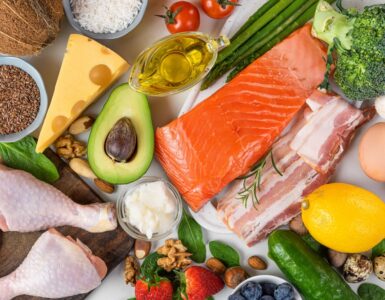
Three-ingredient meal prep works on a simple mechanical principle: fewer ingredients means fewer decisions, and fewer decisions is what actually determines whether a dinner gets cooked on a Tuesday or ordered from an app instead. The formula isn’t about deprivation — it’s about picking three components that each do real work, so the meal doesn’t need a fourth ingredient to taste finished. A protein, a flavor-carrying base, and a starch or vegetable that absorbs both: that’s the whole system, and it holds up across a dozen cuisines once the label-reading part is dialed in. The difference between a three-ingredient dinner that tastes complete and one that tastes unfinished almost always comes down to sourcing, not skill — a jarred sauce with real reduction behind it does more work than a thin one, and a pre-seasoned protein saves an entire spice rack’s worth of steps. What follows is a set of low-friction combinations built for weeknight meal prep, plus the specific label details worth checking before any of them go in the cart.
How the Formula Actually Works
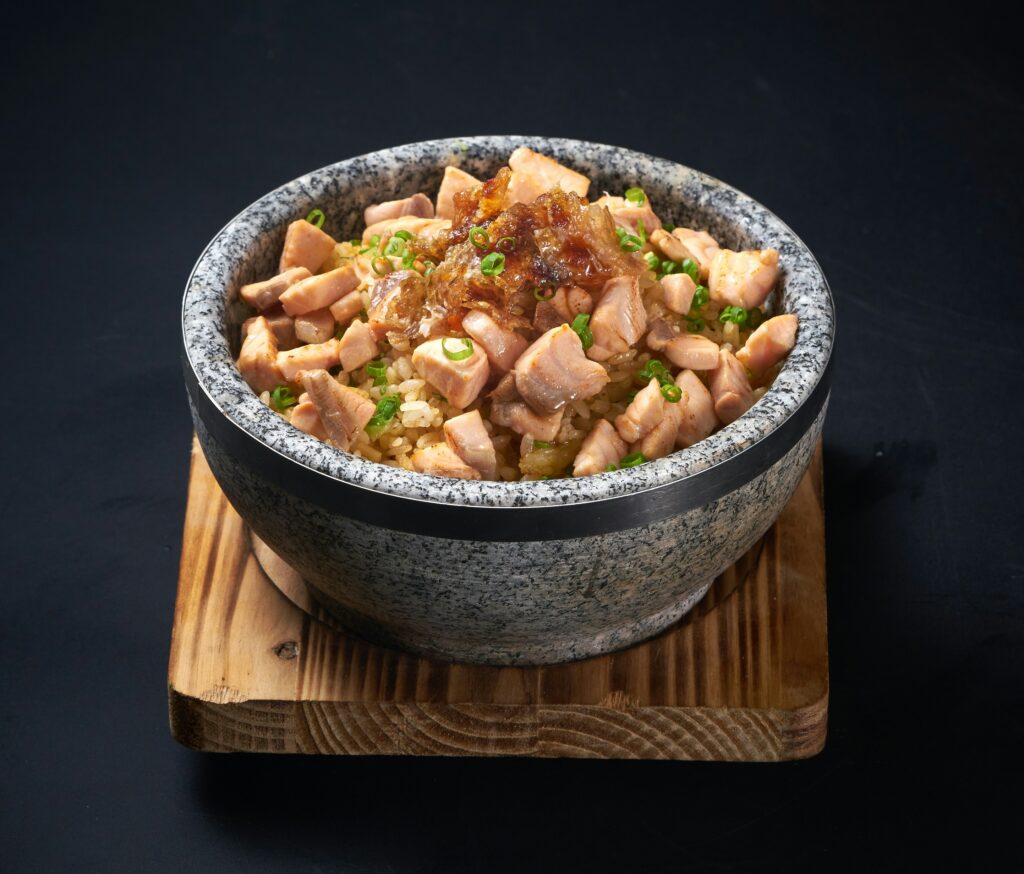
A three-ingredient dinner works because the ingredients are chosen for role, not variety. One component supplies protein and bulk, one supplies concentrated flavor, and one supplies texture or starch to round it out. When all three are doing distinct jobs, nothing tastes like it’s missing — the dish reads as complete because each element covers ground the others don’t. This is why plain chicken and plain rice taste unfinished: two of the three roles are filled, but nothing is supplying concentrated flavor, so the dish depends entirely on salt and technique to close the gap. Swap in a jarred harissa or a good barbecue sauce as the third component, and the flavor role gets filled without a fourth ingredient or a spice drawer’s worth of measuring.
For meal prep specifically, this matters twice as much, because the same three ingredients need to survive four or five days in the refrigerator without the flavor component drying out or the starch turning gummy. That’s a sourcing question as much as a technique one.
What to Check on the Protein Label
Buy pre-cooked or quick-cooking protein whenever the label supports it — that’s the entire point of trimming a recipe to three ingredients. Rotisserie chicken, canned or pouched salmon, pre-cooked shrimp, and firm tofu are the four workhorses, and each has a specific thing worth checking before it goes in the cart.
For rotisserie chicken, check the ingredient list for added sugar and modified starch. Some brands inject a brine solution that’s mostly water and dextrose, which dilutes flavor and adds volume that cooks out as steam during reheating. A shorter brine list — salt, chicken broth, maybe rosemary — means less water weight and better texture on reheat.
For canned or pouched salmon and tuna, sodium varies enormously between brands packed in oil versus water, and “no salt added” versions exist specifically for meal prep where the sauce is already supplying seasoning. Stacking a salted brine on top of a salted sauce is how a dish ends up too salty by day three, once the sauce has had time to fully penetrate.
For tofu, look for “high-protein” or “super-firm” on the label. Those varieties are pressed further at the factory and hold their shape through a week of reheating in a way standard firm tofu doesn’t.
The Sauce Does the Heavy Lifting
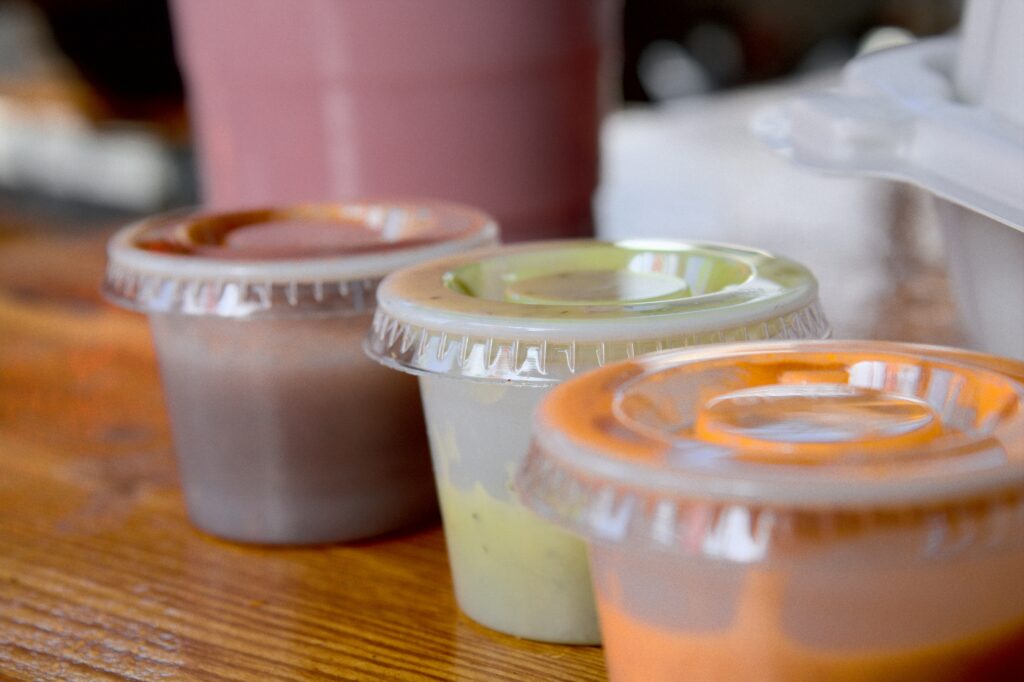
The second ingredient carries almost all of the flavor identity of the dish, so it deserves more label-reading than the protein does. Check the ingredient list’s first three items specifically, since ingredients are listed by weight — a sauce that opens with tomato, onion, and garlic is doing real reduction work, while one that opens with water, sugar, and modified corn starch is mostly thickened sugar water wearing a flavor.
Sodium matters more here than in almost any other packaged food category, because the sauce gets used across an entire batch of meal prep rather than a single serving. A sauce with 400mg of sodium per two-tablespoon serving reads fine on one plate; multiplied across a pan coating four days of protein, that number compounds fast. Check the serving size the sodium figure is based on, not just the number itself — some brands quietly shrink the serving size to make the count look lower.
Vinegar- or citrus-based sauces — chimichurri, salsa verde, a vinaigrette-forward marinade — tend to hold their character in the refrigerator better than cream- or dairy-based ones, which can separate or dull by day four. For anything prepped more than two days out, that durability matters more than the first-bite taste.
Five Combinations to Prep This Week
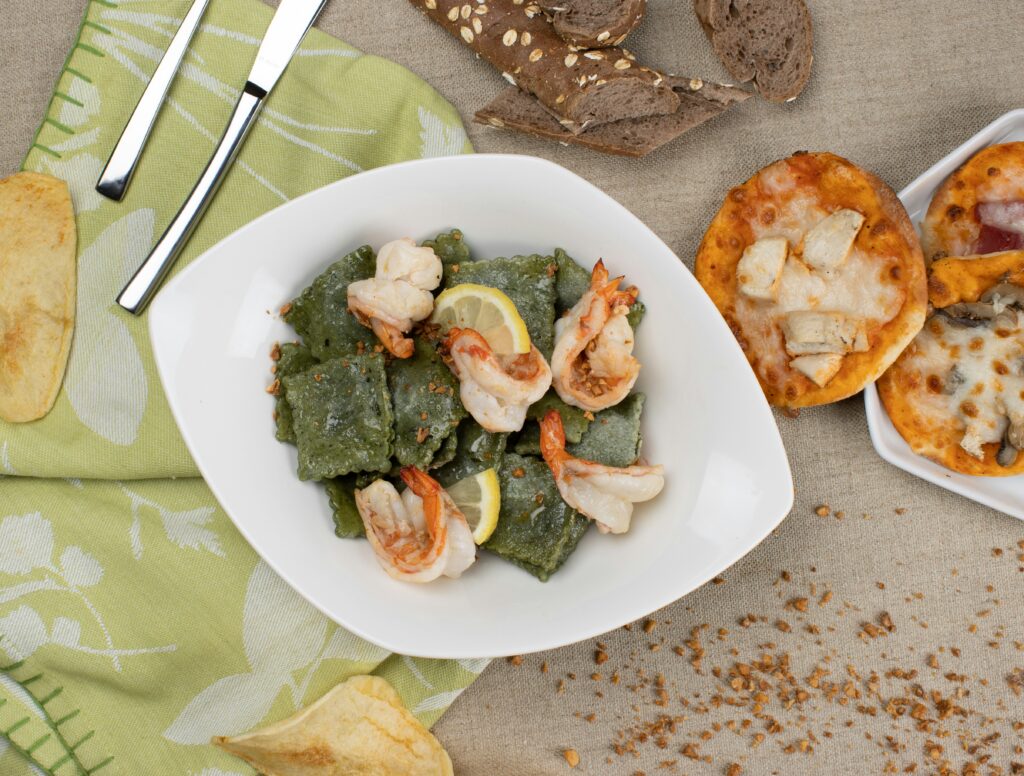
Rotisserie chicken, jarred tikka masala sauce, and frozen cauliflower rice. Salmon pouch, chimichurri, and canned white beans. Firm tofu, peanut sauce, and pre-shredded coleslaw mix, kept raw rather than cooked so it holds its crunch through the week. Ground turkey, jarred arrabbiata, and zucchini noodles. Shrimp, salsa verde, and canned hominy. Each pairing follows the same role structure — protein, concentrated flavor, texture-and-starch — and each can be portioned into containers in under twenty minutes once the protein is already cooked.
Cook the starch or vegetable component separately from the sauce whenever the vegetable releases water during storage, as cauliflower rice and zucchini noodles do, and combine them only at reheating. Mixing a watery vegetable into a sauce four days before eating it is the single most common cause of a meal prep container turning into soup by Thursday.
One More Number Worth Checking
Meal prep dinners get judged on whether they keep someone full until the next meal, and that comes down to grams of protein per serving more than almost anything else on the label. A rotisserie chicken breast portion typically runs 25 to 30 grams of protein; a sauce-heavy dish built around a smaller protein portion — a few shrimp, a thin layer of tofu — can look identical on the plate while delivering half that, which is usually why an otherwise well-built three-ingredient dinner still leaves someone hungry by 8 p.m.
Check the serving size on the protein package against the actual portion going into each container, not the number on the front. A “4 servings” label on a rotisserie chicken often assumes a smaller portion than most people actually eat, so the protein-per-container math needs a quick recalculation rather than a straight read of the label.
Storage: What Keeps It From Going Soggy
Layer, don’t mix, whenever the storage window runs past two days. Sauce on the bottom, protein in the middle, starch or vegetable on top keeps the driest component away from direct contact with liquid until reheating actually happens, which slows the texture breakdown that ruins most meal prep by the back half of the week.
Glass containers reheat more evenly than plastic in a microwave, which matters specifically for dairy- or egg-based sauces, since uneven heating is what causes those to break or separate. A five-day batch is also a five-day test of container seal quality — a lid that doesn’t fully seal lets refrigerator air dry out the exposed surface of whatever sits on top, usually the starch, by day three.
The three-ingredient structure holds up for freezing too, with one exception: raw vegetables used for crunch, like coleslaw mix or cucumber, don’t survive freezing intact and should be added fresh at serving rather than frozen with the rest of the batch.
Want this turned into a doc, or should headline and meta description variants come next?