
For roughly two and a half million years, our ancestors ate what they could catch, dig up, or pull off a branch. Farming arrived about 10,000 years ago. The drive-through arrived about 75 years ago. On an evolutionary clock that is less than a blink, yet we now expect bodies tuned for the Pleistocene to handle a 64-ounce soda and a bag of chips that carries half a day’s sodium.
The results show up in the numbers. More than half a billion adults worldwide now live with diabetes. Heart disease remains the leading cause of death in the United States, and high blood pressure, driven heavily by salt intake, is one of its main accelerants. Nothing in our history prepared us for this. The human body had no reason to evolve a brake on sugar or salt when both were scarce, so it didn’t.
The Paleolithic diet, usually shortened to “Paleo,” takes that mismatch as its starting point. The premise is simple: eat closer to the way humans ate before agriculture, and many of the diseases of abundance lose their footing. It is not a perfect historical reenactment. Nobody is spearing mammoths. But as a framework for cutting out the foods our biology never saw coming, it has more going for it than its caveman marketing suggests.
What follows covers where the Paleolithic diet, or “Paleo Diet, came from, what it asks of you, and why each of its rules exists.
Origins and Specifics of the Paleolithic Diet
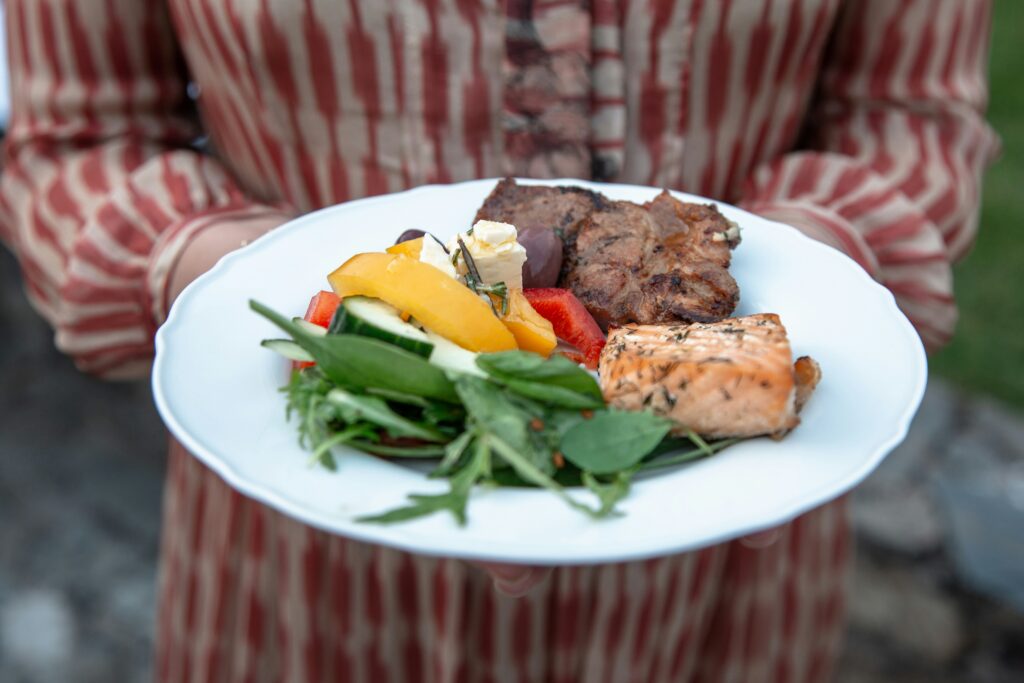
The Paleolithic era runs from about 2.6 million years ago, when our ancestors first made stone tools, to around 10,000 to 12,000 years ago, when agriculture took hold in the Fertile Crescent. Everything our species is, physically, was built during that stretch. The agricultural period that followed accounts for less than one percent of the human timeline.
The modern diet built around that idea has a traceable lineage. Gastroenterologist Walter Voegtlin published The Stone Age Diet in 1975, arguing that humans were carnivores by design and that modern digestive ailments came from straying. Few people read it. A decade later, in 1985, physician S. Boyd Eaton and anthropologist Melvin Konner published “Paleolithic Nutrition” in the New England Journal of Medicine. That paper gave the idea academic respectability. Eaton and Konner compared estimates of hunter-gatherer diets with modern Western eating and found the gaps were large: ancestral diets carried far more fiber, far more potassium, far less sodium, and almost no refined sugar.
The concept went mainstream in 2002 with Loren Cordain’s book The Paleo Diet. Cordain, an exercise physiologist at Colorado State University, turned the research into rules a person could follow at a grocery store. Most versions of Paleo in circulation today descend from his.
The core of the diet, in its common form:
Eat: Meat (ideally grass-fed or wild), fish and seafood, eggs, vegetables, fruit, nuts, seeds, and natural fats such as olive oil, avocado, and animal fat.
Avoid: Grains, legumes, dairy, refined sugar, added salt, refined vegetable oils, and processed food in general.
A fair warning belongs here. Hunter-gatherers were never one population eating one menu. Arctic peoples lived largely on fat and protein. Groups in the tropics ate far more plant matter. Starch residue on grinding stones shows that some humans were processing wild grains tens of thousands of years before farming. The “Paleo Diet: is a composite, not a recipe recovered from a cave wall. That doesn’t sink the idea. It just means the diet is best understood as a set of principles.
The Particular Emphases of the Diet
Salt: Scarcity Engineered Out of Existence

Sodium is essential. Nerves need it, muscles need it, and the body works hard to keep it. That hoarding instinct made sense for most of human history, when salt came mainly from the meat and plants people ate. Extensive research estimates put Paleolithic sodium intake at well under 1,000 milligrams a day.
The average American now eats about 3,400 milligrams a day. The American Heart Association recommends no more than 2,300, and ideally 1,500. Most of that excess doesn’t come from the salt shaker. It comes from bread, deli meat, canned soup, sauces, and restaurant food, where salt is cheap flavor and cheap preservation.
The body’s response is predictable. Excess sodium pulls water into the bloodstream, raising blood volume and pressure. Sustained over years, that pressure damages arteries and strains the heart and kidneys. The World Health Organization attributes nearly two million deaths a year to high sodium intake. Our kidneys were built to conserve a scarce mineral. We handed them a flood.
Sugar: From Rare Prize to Background Noise

There’s a second half to this. Ancestral diets were also rich in potassium, from fruits, vegetables, and tubers. Potassium helps the body excrete sodium and relaxes blood vessel walls. Hunter-gatherers likely ate several times more potassium than sodium. Modern Western diets reverse that ratio. Paleo, by cutting processed food and piling on produce, puts it back roughly where it started.
For our ancestors, sweetness meant ripe fruit in season or a beehive worth being stung for. Sugar signaled dense, fast energy, and the brain rewarded finding it. That reward system is still fully installed. The scarcity is gone.
Refined sugar was a luxury in Europe until the 1700s, when colonial plantations, built on enslaved labor, made it cheap enough for ordinary households. Consumption climbed through the industrial era and then accelerated again in the 20th century with soft drinks and, later, high-fructose corn syrup. Americans now average around 17 teaspoons of added sugar a day, well past the six to nine recommended by the American Heart Association.
The metabolic cost comes through insulin. Every surge of sugar triggers insulin to move glucose out of the blood. Repeat that surge several times a day for decades, and cells begin to respond less. That’s insulin resistance, and it sits upstream of type 2 diabetes. It is also tied to fatty liver disease, where the liver, which handles fructose, converts the excess into fat. Our metabolism was calibrated for a few handfuls of berries. It is now processing traditional soda by the liter, and it is losing.
Paleo removes refined sugar entirely. Whole fruit stays, because it arrives with fiber and water that slow absorption.
Protein: Lean, Wild, and Satisfying
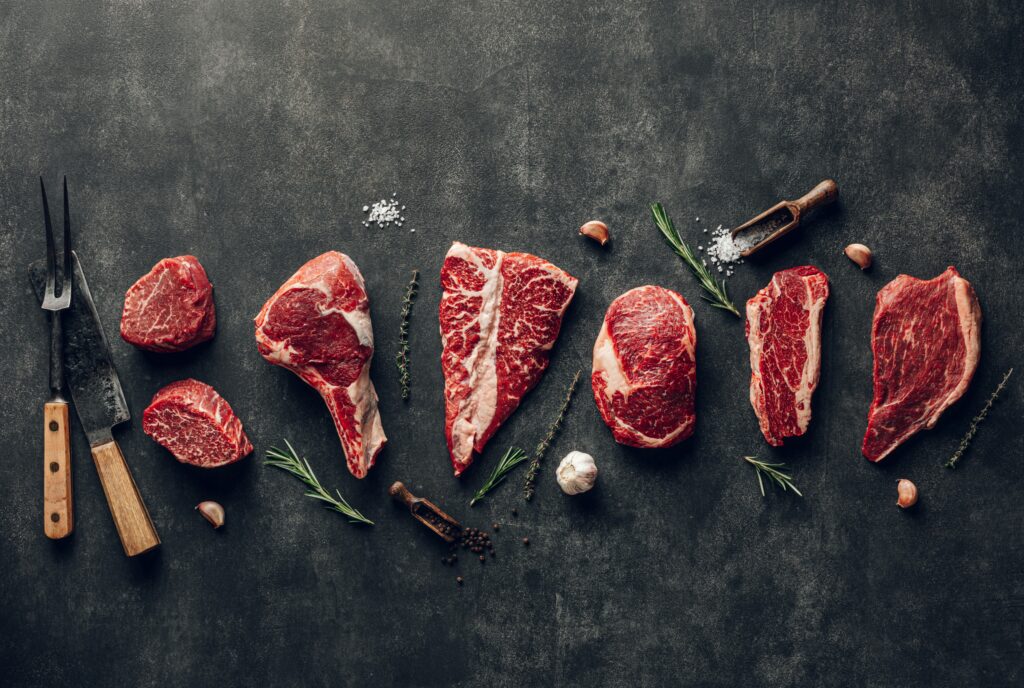
Meat and fish sit at the center of most Paleo plates. Hunting was a major source of calories and nutrients for many ancestral groups, and animal foods supply complete protein, iron, zinc, and vitamin B12 in forms the body absorbs readily.
The diet leans toward grass-fed, pasture-raised, or wild sources. The reason isn’t nostalgia. Wild game is generally leaner than grain-finished feedlot beef, and grass-fed meat tends to carry a better ratio of omega-3 to omega-6 fatty acids. Fish, particularly fatty fish like salmon and sardines, supplies omega-3s directly.
Protein also does practical work. It is more filling per calorie than carbohydrates or fat, which makes overeating harder. Many people who try Paleo report eating less without trying to. That is less a miracle than a matter of swapping foods designed to be over-eaten for foods that aren’t.
Vegetables and Fruit: The Bulk of the Plate

Despite the carnivorous reputation, a well-run Paleo diet is heavy on plants. Leafy greens, root vegetables, peppers, squash, berries, and citrus provide fiber, vitamins, and the potassium mentioned above.
Estimates of ancestral fiber intake run as high as 70 to 100 grams a day. Most Americans eat about 15. Fiber feeds gut bacteria, slows sugar absorption, and keeps digestion regular. Cutting grains might seem like a fiber risk, but vegetables and fruit, eaten in quantity, cover it.
Fats: Rehabilitated

Paleo arrived as the low-fat era was fading, and it helped push fat back onto the plate. Olive oil, avocado, nuts, and animal fats are all allowed. What it rejects is industrial seed oil and trans fat, products of 20th-century food chemistry that no ancestor ever tasted. Trans fats in particular did enough cardiovascular damage that the FDA effectively banned artificial versions in 2018.
Movement: The Half of the Lifestyle Nobody Sells

A hunter-gatherer’s meal came attached to a commute. Food had to be tracked, dug, carried, and hauled back to camp, and camps moved with the seasons. Anthropologist Herman Pontzer and his colleagues, who have studied the Hadza tribe in Tanzania with heart-rate monitors and GPS, found they average more than two hours of moderate-to-vigorous activity a day. Hadza men often walk around 11 kilometers daily; women, around 5 to 6, frequently carrying children. The average American logs a small fraction of that and spends most waking hours sitting.
Our bodies show the imprint of that history. Harvard’s Daniel Lieberman and Dennis Bramble have argued that traits like our springy Achilles tendons, abundant sweat glands, and stabilizing glute muscles evolved for long-distance walking and running, possibly for persistence hunting, where humans chased prey until it overheated. We are, anatomically, built to cover ground.
Movement also does metabolic work the diet can’t do alone. Regular activity lowers blood pressure, improves insulin sensitivity for hours afterward, and preserves muscle, the body’s largest glucose sink. Even rest looked different: Pontzer’s team found the Hadza often rest by squatting or kneeling, positions that keep leg muscles lightly engaged in a way a chair never does.
Practically, that doesn’t mean training like a mammoth hunter. It means walking a lot, lifting and carrying heavy things, getting up from the floor, sprinting occasionally, and treating long stretches of sitting as the anomaly they should be.
What the Diet Gets Right
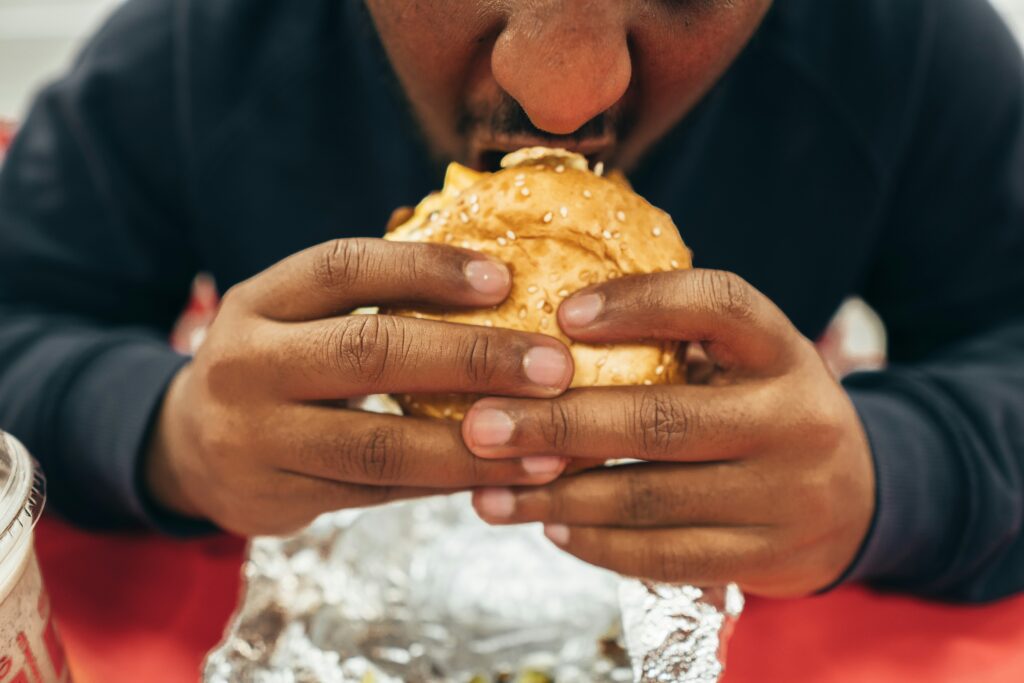
Stripped of the caveman imagery, Paleo’s strongest argument is its simplest: our bodies adapted to scarcity and constant motion, and we now live in surplus and stillness. Salt and sugar were once rare prizes our biology learned to chase. Industry made them endless and cheap, then built a world where we barely have to stand up to get them. The bill arrives as hypertension, heart disease, and diabetes.
You don’t have to believe every hunter-gatherer ate the same way to see the sense in eating mostly meat, fish, vegetables, fruit, and nuts, cutting the packaged food, and walking like your survival once depended on it. It did. Like every other species, we’re an evolutionary one. Millions of years of evolutionary history, predating the written word, the agrarian revolution, and a culture of consumption, engineered our bodies to adapt to scarcity and natural sources of food. Operating on that formula predisposes you to having your body operate more effectively, without having to cope with many of the perennial diseases that have come to encompass Western culture.