
To stop overthinking, ask one question first: can I do something about this today? If yes, write down one small step. If no, set the thought aside for a short “worry time” later and get moving. Start with the one you’ll actually do.
Updated November 19, 2026.
How to stop overthinking: the short version
Rainy Pacific Northwest evenings are made for a mug of tea and a few slow yoga stretches. They are also when a head full of replays likes to show up. Years of evening wind-down habits have taught me which tips are worth the bother and which are just noise.
If I could pick one habit, it would be the two-minute test in the next section. It sorts a thought into “I can act on this” or “I can’t yet” before it eats your evening. Everything else in this guide is a backup for the thoughts that fail the test.
Each tip below says who it suits and when to skip it. Pick one. Try it for a week. Then add another only if you want to.
Try the 2-minute “is this solvable?” test
Set a timer for two minutes and ask three things. Is this something I can change or do something about? Is there one small step I could take today? If not today, is there a day when I will have more information?
If you get a step, write it down and put a time on it. “Email the landlord Thursday” beats “deal with the lease.” If you get no step, the thought goes to the parking lot, which is the next tip.
This one suits worries about money, work, plans and conversations you are putting off. It suits you less when the thought is a feeling with no action attached, such as dread about something far away. Then skip straight to the next tip.
The idea sits close to advice from the UK National Health Service, which says the first step to feeling better is to identify the cause, and that taking control can be empowering. It also suggests focusing on what you can influence and accepting what you can’t change. The test is a quick way to do both.
Park it with a scheduled worry time
Pick a window, say 15 minutes at 5 in the afternoon, that is your worry time. When a worry pops up before then, jot a word or two on a pad and tell yourself it has an appointment. At 5, sit with the pad and go through it.
Who it suits: people whose worries come in all day long, in the shower, in a meeting, on a walk. Many of the worries on the pad will look smaller by the time you get to them. That has been my experience, and it is a habit I recommend because it costs nothing.
When to skip it: if sitting down with worries makes you feel worse, not calmer, do not force it. Try the movement tip instead, and think about talking to a professional, covered near the end.
Write it down, then name the thought
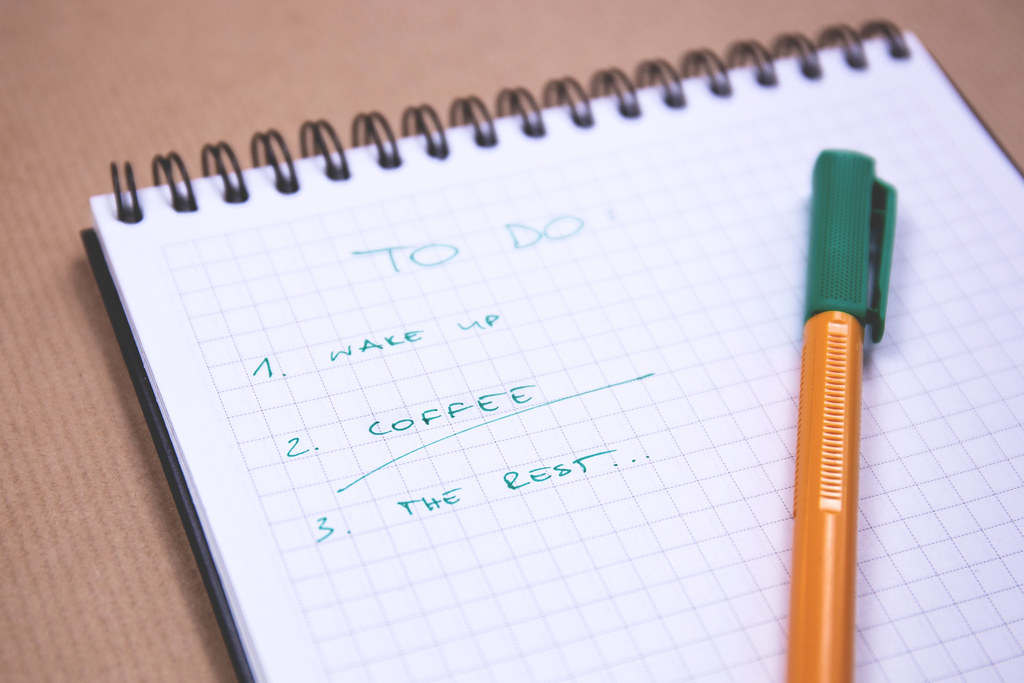
Writing a worry on paper gets it out of the loop in your head. You can see how many separate worries there are, and often it is two or three on repeat. Keep a small notebook by the tea tin and use it.
Then give the thought a plain label: “planning,” “replaying,” “what if,” or “guessing what they think.” Naming it takes ten seconds. It reminds you that a thought is something your mind is doing, not a fact you have to act on.
Both suit you if you like pen and paper and have a bit of a quiet minute. Skip the labeling if it turns into one more thing to analyze. If you start grading yourself on how well you named it, stop.
Move first, think second
Exercise may not make a stressor go away, but the UK National Health Service says it can calm the emotional intensity of a problem and help you think more clearly. NIMH also lists exercise, mindfulness and meditation as ways to manage stress alongside, not instead of, standard treatment.
That matches what I do on a gray day. A brisk walk in a rain jacket, or ten minutes of yoga on the floor, takes the edge off before I try to sort anything out. It does not need to be long.
It suits you if your overthinking happens at a desk or on the couch. Skip the intense workout late at night if it leaves you wired. A slow stretch or a short walk is plenty.
How to stop overthinking at night
Night is the hardest time because nothing else is competing for your attention. A few small moves help me. Write tomorrow’s to-do list before you brush your teeth so your head doesn’t try to hold it. Dim the lights. Keep the evening drink caffeine free; a warm herbal tea is my pick.
On sleep itself, NIMH says getting enough sleep and cutting back on caffeine are healthy habits that can help. Our guide to evening habits for deeper rest has more on setting up a wind-down.
If you are lying awake spinning, try getting up and doing something quiet in low light for a bit, then going back to bed. This suits you if your worries show up the second your head hits the pillow. Skip it if you are exhausted and just need to stay horizontal.
One caution on herbs: if you take medicines or have a health condition, ask your doctor or pharmacist before adding herbal teas or supplements.
Cut back on doom-scrolling and reassurance-seeking
Scrolling for answers at midnight feeds the loop. So does asking five people the same question and then checking their replies again. If you want to look at how social media can wear on you, our guide is a fair place to start, and so is the one on technology stress.
A simple rule helps: one check, then stop. Look up the fact once, ask the person once, and then go back to the step on your list. Phone in another room at bedtime works well for me.
This suits you if you notice your thumb moving before your brain decides. Skip the rule if you are looking for real, practical information, such as an appointment time. That is not scrolling, that is a task.
What to skip
Skip the tip that says to just stop thinking about it. Telling yourself to stop rarely works, and it adds a second job. Skip anything that has you leaning on alcohol, smoking or extra caffeine to cope, since NHS guidance says not to rely on them. And skip trying all of these at once.
Work is a common source of loops, so if yours lives there, our piece on stress at work may help.
Is it overthinking or anxiety?
Everyone overthinks sometimes. NIMH describes generalized anxiety disorder as worry that is hard to control on most days for at least six months, along with other signs such as restlessness, fatigue, poor concentration, irritability, muscle tension or sleep problems. It says to seek help when anxiety starts to disrupt daily life at work, at school or in relationships.
Only a doctor or therapist can tell you which one it is. If this sounds like you, talk with a primary care doctor or a mental health professional. NIMH says cognitive behavioral therapy is a gold standard form of psychotherapy, and a professional can talk through the options with you.
If you are in crisis or having thoughts of suicide, call or text 988 to reach the 988 Suicide and Crisis Lifeline. It is free and confidential, and the lifeline says it is available 24 hours a day, every day. There is also a chat option on its website.
Frequently asked questions about overthinking
Why can’t I stop overthinking?
A loop gets stronger when you keep feeding it, whether by replaying, scrolling for answers or asking others to reassure you. Sorting thoughts into “act” and “park” gives your mind a place to put them. If it stays out of control for weeks and gets in the way of daily life, talk to a professional.
How do I stop overthinking everything?
Start with only one thing. I’d choose the two-minute test, because it makes you decide whether there is a next step. A week of that is a better plan than five habits you drop on day three.
What is the fastest way to stop overthinking?
Move your body for a few minutes, then write down the one thought that is loudest. Going outside for a short walk is my first reach on a damp evening. It will not fix a problem, but it can clear your head enough to look at it.
Is overthinking a sign of anxiety?
It can be, but it is not always. Occasional overthinking is common. If worry is hard to control on most days for months and affects your sleep, work or relationships, see a doctor or therapist.
This article is for general information and is not medical advice. Talk to your doctor or a mental health professional about your own situation.